Family group photos have a reputation for eating weddings alive. They do not have to. After 400+ weddings I can tell you that fifteen minutes is genuinely achievable — but only if you understand what actually takes the time.
It is not the photography. Here is what it really is, and how the order of your day fixes it.
The photos take 90 seconds. Finding people takes 20 minutes.
This is the whole article in one line, so let me be blunt about it.
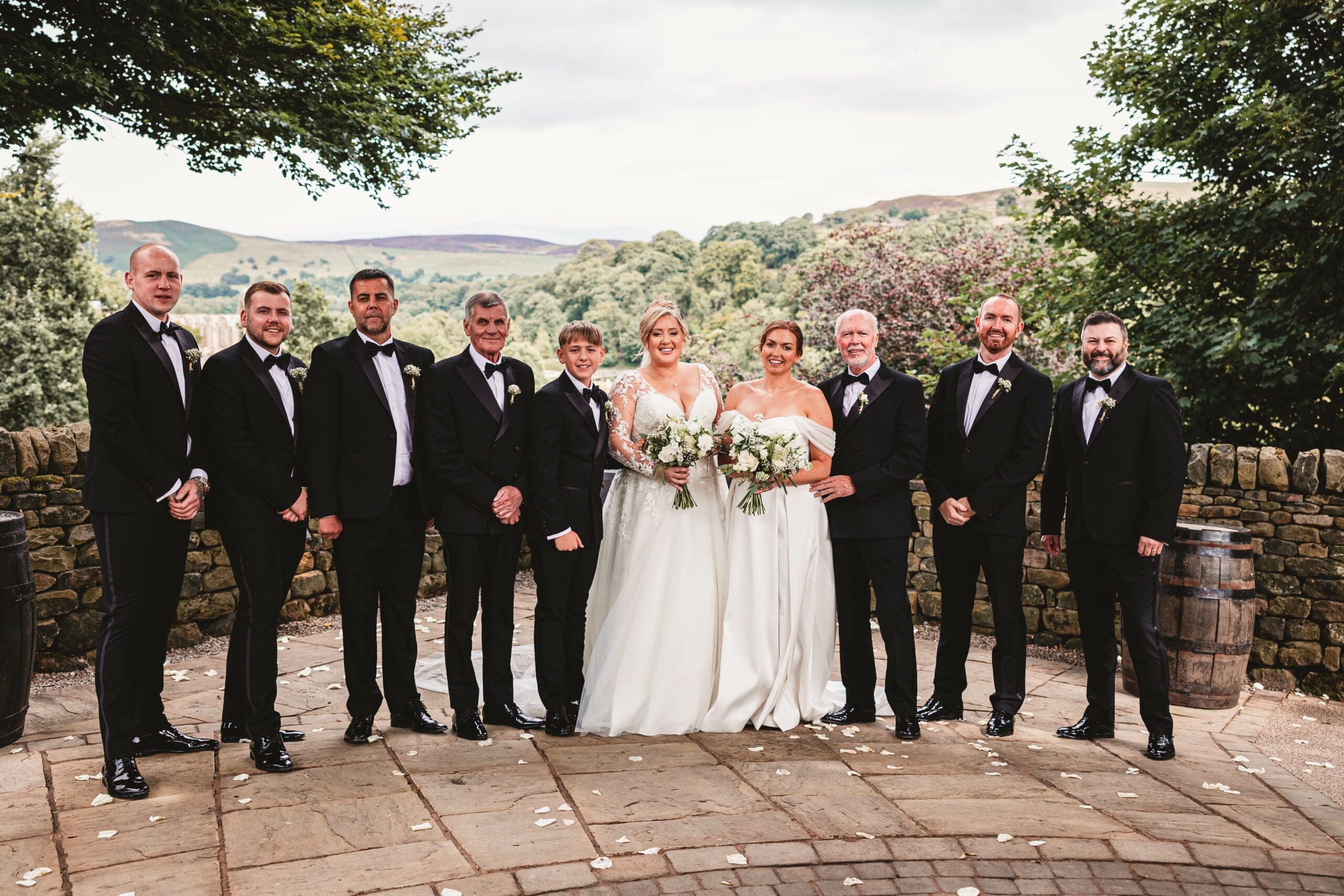
Standing a group of eight people in front of a wall, getting them looking the right way and taking a photograph they will be happy with takes me about ninety seconds. Ten groups is fifteen minutes. That is the maths, and it works every time — when everybody is standing there.
What destroys the schedule is the other thing. Uncle Dave has gone to the bar. Your cousins have taken the kids to see the ducks. Someone is on the phone in the car park. Your mum has gone to help your nan find her handbag. Every single one of those takes three or four minutes to solve, and there are ten of them.
Group photos do not run late because of photography. They run late because of geography. Fix the geography and the rest looks after itself.
Do them the moment the ceremony ends
The single most valuable thing you can do is put the group photos immediately after the ceremony, while every person you need is still in one place and has not yet worked out where the bar is.
You have a window of perhaps ten minutes after the ceremony where your entire guest list is standing together in one small area, still slightly emotional, and entirely willing to be told what to do. That window closes fast. Once it closes you are not photographing a wedding any more — you are conducting a search.
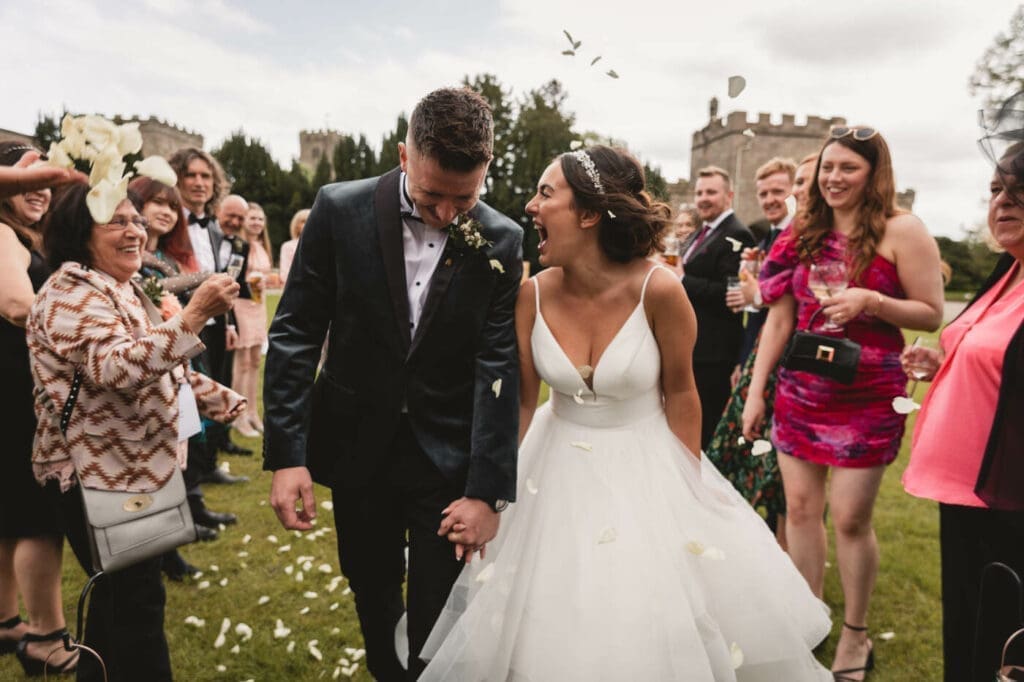
Confetti first, absolutely. That is a brilliant photograph and it keeps everyone in one spot anyway. Then straight into groups while the crowd is still a crowd.
Leaving them until later — after the drinks reception, before the wedding breakfast — feels more relaxed on the timeline. In practice it is the version that takes an hour.

The drinks question, honestly
Here is the part couples do not expect me to say: it is better to delay the drinks than to lose the people.
The second a tray of champagne appears, your guests disperse. They are not being difficult — they have been sitting still for forty minutes, it is the first drink of the day, and the garden looks lovely. Entirely reasonable behaviour. It is also the exact moment your fifteen-minute group session becomes a forty-minute one.
You have two workable options, and either is fine:
- Hold the drinks for fifteen minutes and do the groups first. Nobody will die of thirst, and everyone is free from that point on.
- Serve the drinks, but announce it properly — ask the people needed for photographs to stay in the ceremony area with their glass until they are done.
What does not work is serving drinks, saying nothing, and hoping. That is the version where your best man is found in the car park and your drinks reception disappears.

Order the list biggest first, then release people in waves
This is the bit almost nobody gets right, and it is the difference between fifteen minutes and forty.
Start with the biggest group and work downwards. Everyone together first. Then both families. Then one family. Then parents and siblings. Then just parents. Then just the two of you.
Why it matters: every time a group finishes, the people who are no longer needed can be released — told, out loud, that they are done and free to go and have a drink. The crowd shrinks steadily instead of everybody standing around waiting to find out whether they are in the next one.
Do it the other way round — small groups first, building up — and you have to keep everybody standing there the whole time, because the biggest photo is still coming. Guests get bored, wander off, and you end up rounding up the same people twice.
Biggest to smallest. Release as you go. That one change saves more time than anything else on this page.
Write the list in advance — and use names
A list agreed beforehand is worth more than any amount of goodwill on the day. I send every couple a questionnaire about four to eight weeks before the wedding for exactly this.
Two rules make a list actually work:
Use names, not relationships. “Bride’s mum’s side” means nothing to me when I am looking at 90 strangers. “Auntie Sue, Uncle Pete and their three” means I can call it out and people answer. Full names, and any nicknames they will actually respond to.
Keep it to eight or ten groups. Every group you add is another ninety seconds plus the shuffle. Twenty groups is not a fifteen-minute job, it is forty-five minutes, and it will be the part of the day your guests remember for the wrong reasons.
If there is a sensitive combination — divorced parents, a family member who should not be stood next to another — tell your photographer in advance. We handle it constantly, it is never awkward, and it is far better dealt with quietly beforehand than discovered in front of everybody.

Nominate someone who knows both families
I know your faces from the morning. I do not know your Auntie Sue.
Pick one person from each side — an usher, the best man, a chief bridesmaid, a loud cousin — and give them the list. Their job is to know the faces and have the voice. They shout names, I take photographs, and the whole thing moves at twice the speed.
Tell them beforehand so they know it is a job. A good wrangler is genuinely worth ten minutes, and people usually enjoy being given something to do.
What fifteen minutes actually looks like
A real running order from a wedding of about 90 guests:
- Everyone — the whole lot, one big photo (2 min — release most of the room)
- Both families together (90 sec)
- One partner’s whole family (90 sec — release the other side)
- The other partner’s whole family (90 sec — release them)
- Both sets of parents with the couple (90 sec)
- Each set of parents separately (2 × 90 sec — release parents)
- Siblings (90 sec)
- The wedding party (2 min)
That is eight groups, roughly thirteen minutes, and by the end of it there are four people standing in front of me instead of ninety. Everyone else has been at the bar for ten minutes and does not feel like they have been at a photoshoot.
What it costs when it goes wrong
Not to labour it, but couples rarely realise what the knock-on actually is.
Group photos that overrun do not just take longer — they come out of your couple portraits, because the wedding breakfast is not moving. Lose twenty-five minutes on groups and you lose most of your time alone together, which is usually the part couples say afterwards they wish they had more of.
It also means your guests spend the start of their drinks reception standing in a field waiting to be called, rather than drinking and talking. Nobody will say anything. They will just remember it.
Fifteen minutes done properly and everybody wins. It really is only a question of order.
The short version
- Groups go straight after the ceremony, while everybody is still in one place
- Hold the drinks for fifteen minutes, or announce clearly who needs to stay
- Order the list biggest group first, and release people as you go
- Eight to ten groups, written down in advance, with real names
- Give the list to someone from each family who can shout
Get those five right and you will be done in a quarter of an hour, with better photographs and guests who never realised there was a schedule at all.
If you are planning your day and want a hand with the running order, just ask — I do this most weekends and I would rather sort it out now than on the morning.
Related reading: what photo list to give your photographer · how far in advance to book a photographer · questions to ask a wedding photographer