
Wedding speeches: before or after food?
It is one of the last decisions couples make and one of the few that genuinely changes how the middle of your day feels. Speeches before the wedding breakfast, or after it?
There is no universally right answer, but there is a right answer for your speakers, and that is usually the thing to decide it on. Below is the honest case for each, the drawbacks nobody mentions when they are pushing you one way, and what I see happen from behind a camera at around eighty weddings a year.
Speeches before food: the advantages
Your speakers can actually enjoy the day. This is the big one, and it outweighs most of what follows. A nervous best man who has to wait until half past four has not tasted a single course. He has pushed a plate around, checked his notes eleven times and gone outside twice. Do the speeches first and the moment they are done he is a different person for the rest of the wedding.
The speeches are better. Fewer drinks in means tighter, shorter and considerably less likely to wander somewhere regrettable. Nobody has ever finished a wedding wishing the best man had been drunker.
Your guests are at their sharpest. Seated, settled, attentive, and not yet sleepy from a big meal and three glasses of red. Jokes land properly and the room reacts as one, which is exactly what you want in the photographs.
Your caterers will quietly thank you. Speeches first means the kitchen plates three courses in one continuous run with no gap in the middle. Food goes out hot and on schedule. Ask your venue which they prefer and most will say before.
Speeches before food: the disadvantages
Your guests are hungry. They had canapés at one o’clock and it is now half two. A hungry room is a more impatient room, and if the speeches overrun it turns into a restless one. Twenty minutes is fine. Fifty is not.
Overruns push the whole day back. When speeches sit before the meal, every minute they run over is a minute off everything after them — and the kitchen has a serving window it cannot simply move. This is the single most common way a wedding timeline quietly collapses.
The room is still settling. People have just come in from the drinks reception. Someone is in the loo, two are still at the bar, and a toddler has decided now is the moment. Give it five minutes before anyone stands up.
Your speakers are nervous for longer. The flip side of the main advantage: they spend the entire drinks reception dreading it rather than the meal.
Speeches after food: the advantages
The room is warm. Fed, watered, a couple of drinks in and thoroughly in the mood. A joke that would get a polite laugh at two o’clock gets a proper one at half four. If your speakers are confident and want a good audience, this is the better slot.
Nobody is clock-watching for their dinner. Guests can give the speeches their full attention because the thing they were waiting for has already happened.
It flows into the evening. Speeches, cake cut, evening guests arriving, first dance — it is a natural run of events, and it keeps the last part of the afternoon from sagging.
No pressure on the kitchen. Your caterers serve to a fixed time and the speeches take as long as they take.
Speeches after food: the disadvantages
Your nervous speakers have a miserable afternoon. I have watched a father of the bride eat nothing across three courses, and then give a lovely speech and finally exhale at five o’clock. He missed his daughter’s wedding breakfast entirely. If anyone speaking is anxious, this alone is usually enough to settle the question.
More drinks, longer speeches. Everything runs looser. Most of the time that is charming. Occasionally it is not, and it is always longer than planned.
The post-meal drift. Full stomachs, a warm room and an open bar. People slip out for a cigarette, take a phone call, go and change their shoes. Holding a full room after a big meal is genuinely harder, and your speakers feel it.
The room looks used. By this point the tables carry empty plates, folded napkins and a forest of glasses, and the light through the windows has usually gone flat or gone entirely. It is a less pretty backdrop than the same room ninety minutes earlier.
The third option: split them
You are not limited to all-before or all-after, and the split is the option couples forget.
One before, the rest after. A short welcome from the father of the bride before the starters — two minutes, thank you for coming, enjoy your meal — then the longer speeches once everyone has eaten. It warms the room up early without making anybody wait through a meal they cannot taste.
Between courses. One speech between main and dessert is a good way to break up a long sit-down. Ask your caterer first, because it affects their service, and some will say no.
Split by nerves. My favourite version: whoever is dreading it goes first, before the food. The confident ones go afterwards, to the warm room. Everyone gets the slot that suits them.
What this looks like through a camera
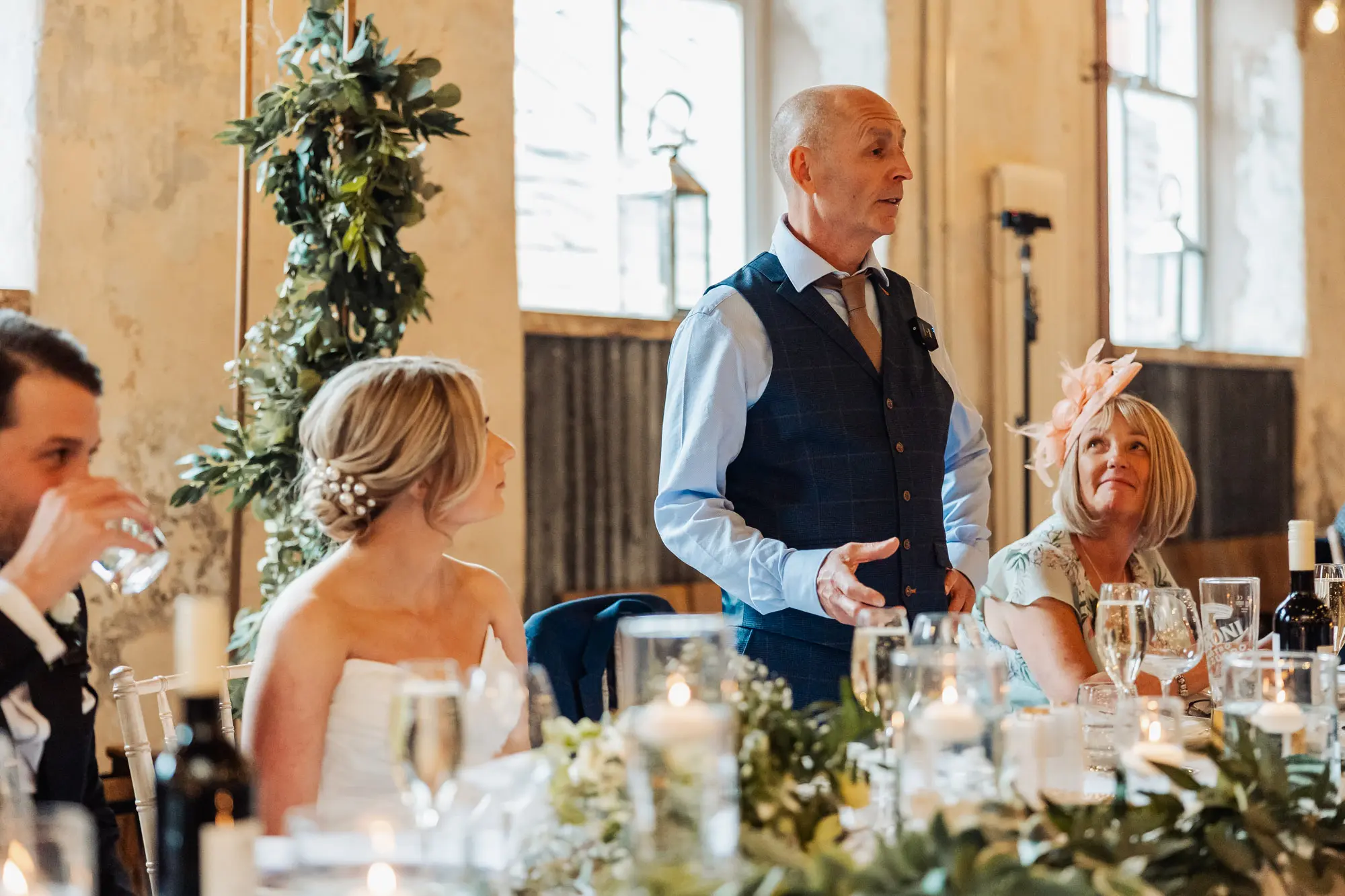
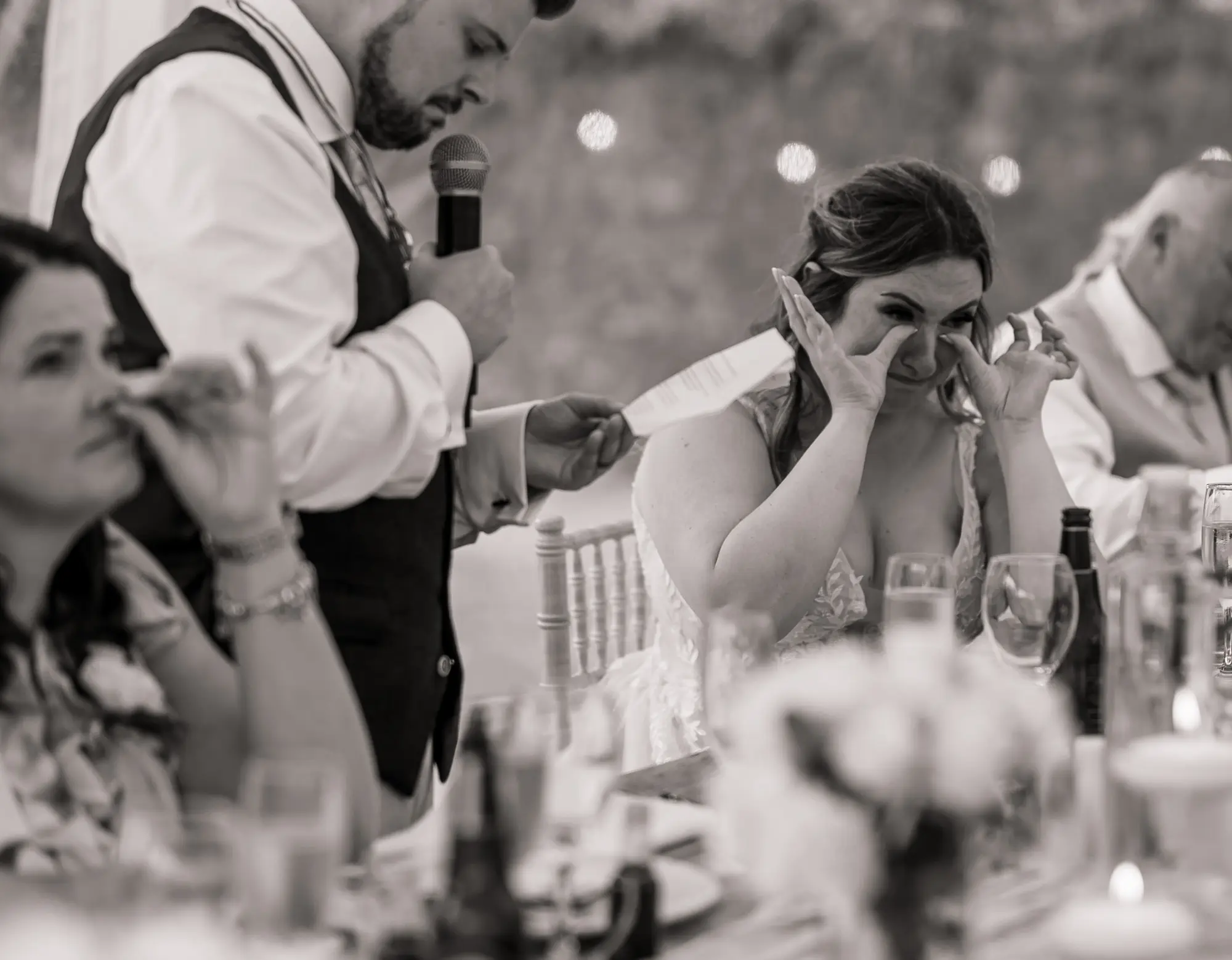
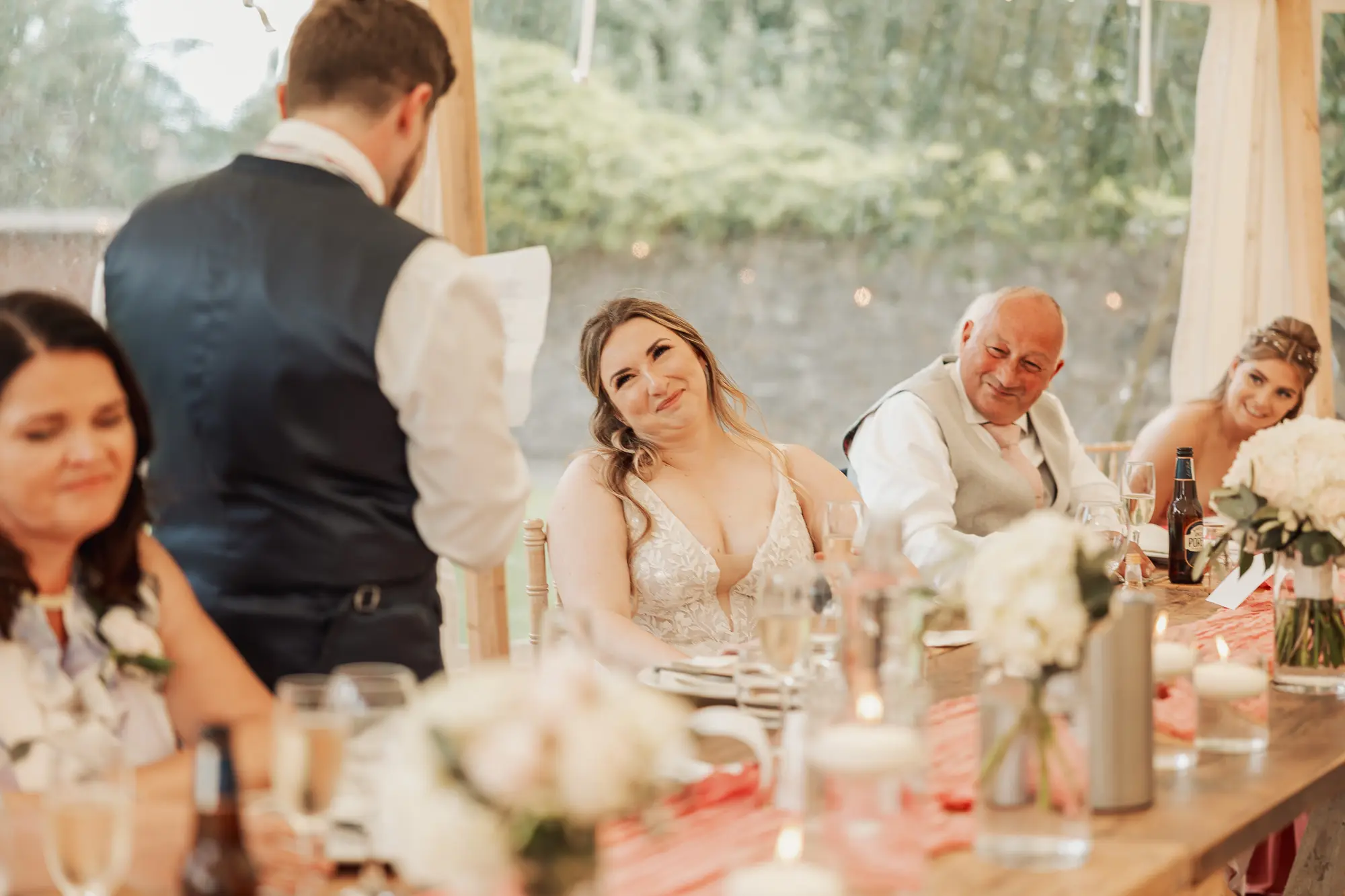
A thing worth knowing when you decide: the best speech photographs are almost never of the person speaking. They are of the room. The mother wiping her eyes, the table of mates folded in half laughing, the bride’s face as her dad says the thing he has clearly practised in the car.
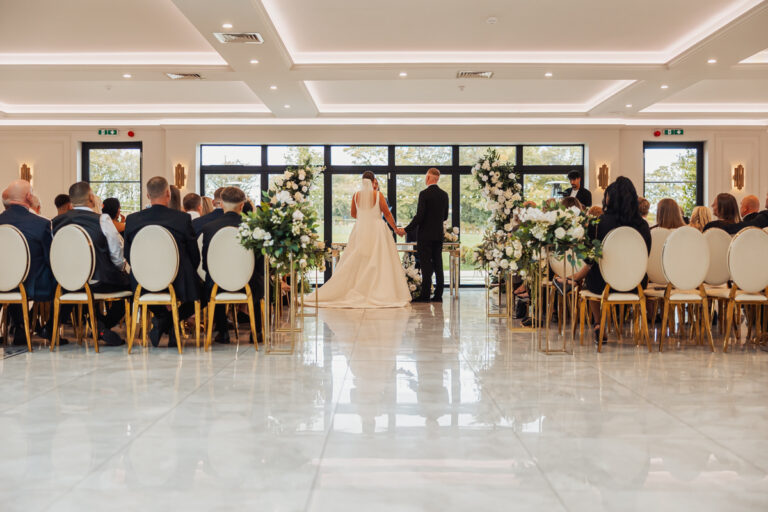
That matters for your timing, because those reactions need light. Speeches before the meal usually sit in the brightest part of the afternoon, with daylight still coming through the windows. Push them to five o’clock in November and I am working in whatever the venue’s uplighters give me.
Two small favours while you are planning. Do not seat the top table directly in front of the only window — it makes every speaker a silhouette. And get a microphone. Barns and marquees swallow voices, and a speech nobody can hear at the back is a speech half your guests did not get.
So which should you choose?
If I had to give you one answer: before the food, unless you have a specific reason not to.
The advantages of going first are practical and they are felt by everyone — better speeches, a sharper room, food served hot, and speakers who get to enjoy their own day. The advantages of going afterwards are real but they mostly benefit the confident speaker who was going to be fine either way.
Choose after the meal if your speakers are relaxed and you want the warmest possible audience, or if your venue or caterer asks for it. Choose the split if you have one nervous speaker and two who are not.
Whatever you land on, tell your caterer, your band and your photographer well in advance, and give every speaker a five-minute target. Twenty-five minutes of speeches is a delight. Fifty is an endurance event, whenever you hold it.
Still shaping the middle of your day? Here is how I work through a wedding day, and what my packages cover.