The questions I would ask if I were walking round with you
Choosing the venue is the first big decision you make, and it quietly settles most of the others: your date, your budget, how many people you can invite, and what the day actually feels like. Everything after it is downstream.
The trouble is that a viewing is a sales meeting. You get shown the room at its best, usually empty, usually on a nice afternoon, and it is very hard to picture two hundred people and a wet Saturday in November. After six years and four hundred weddings I have been inside a lot of these buildings on the day itself, which is a very different experience from the tour.
So here is the list I would take round with me. Tick things off as you ask them, jot down what they say, and add each venue you visit so you can compare them properly afterwards. It saves as you go, so you can pull it up on your phone at the next one.
None of this is about catching a venue out. Good venues answer all of it happily, and the answers are usually the reason they are good. It is the hesitation that tells you something.
Start with the light, because it is the one thing nobody can change
This is the question I would ask first and the one almost nobody asks: which way does the ceremony room face, and how much daylight actually gets into it?
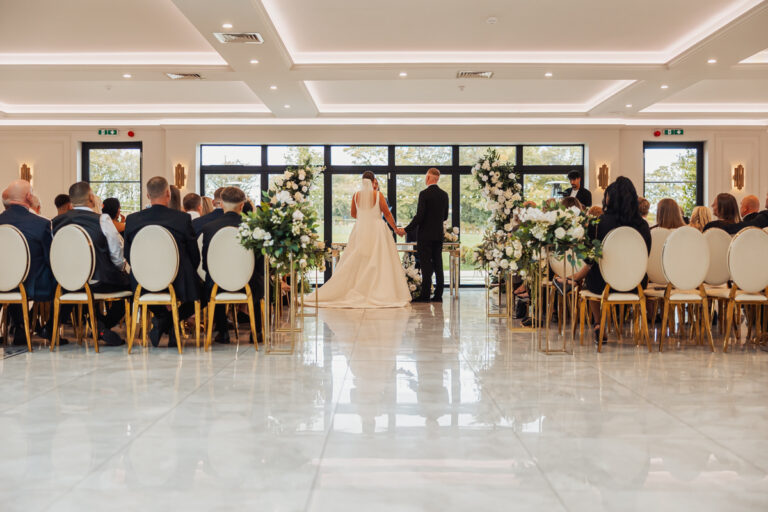
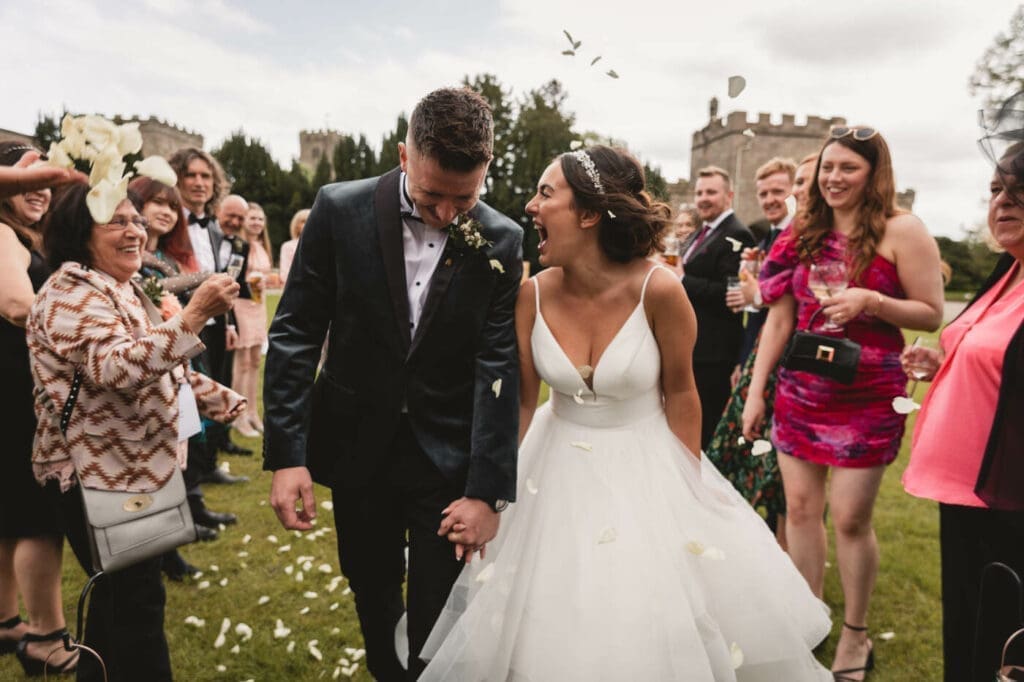
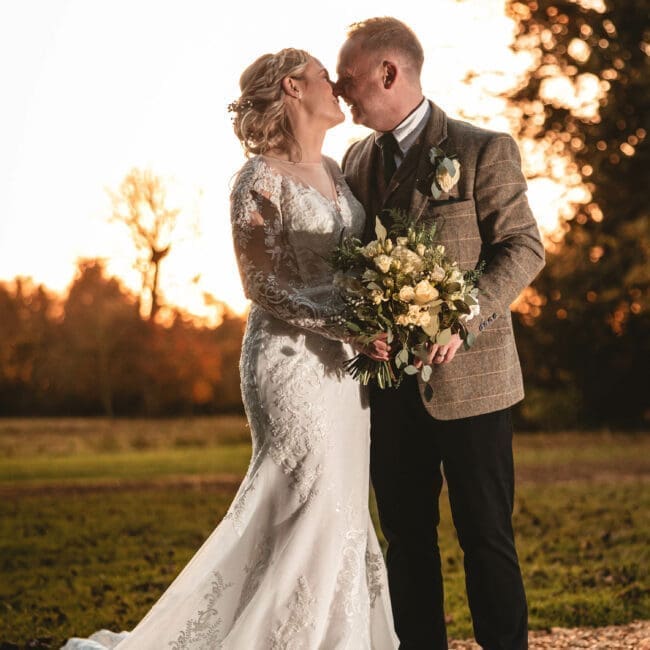
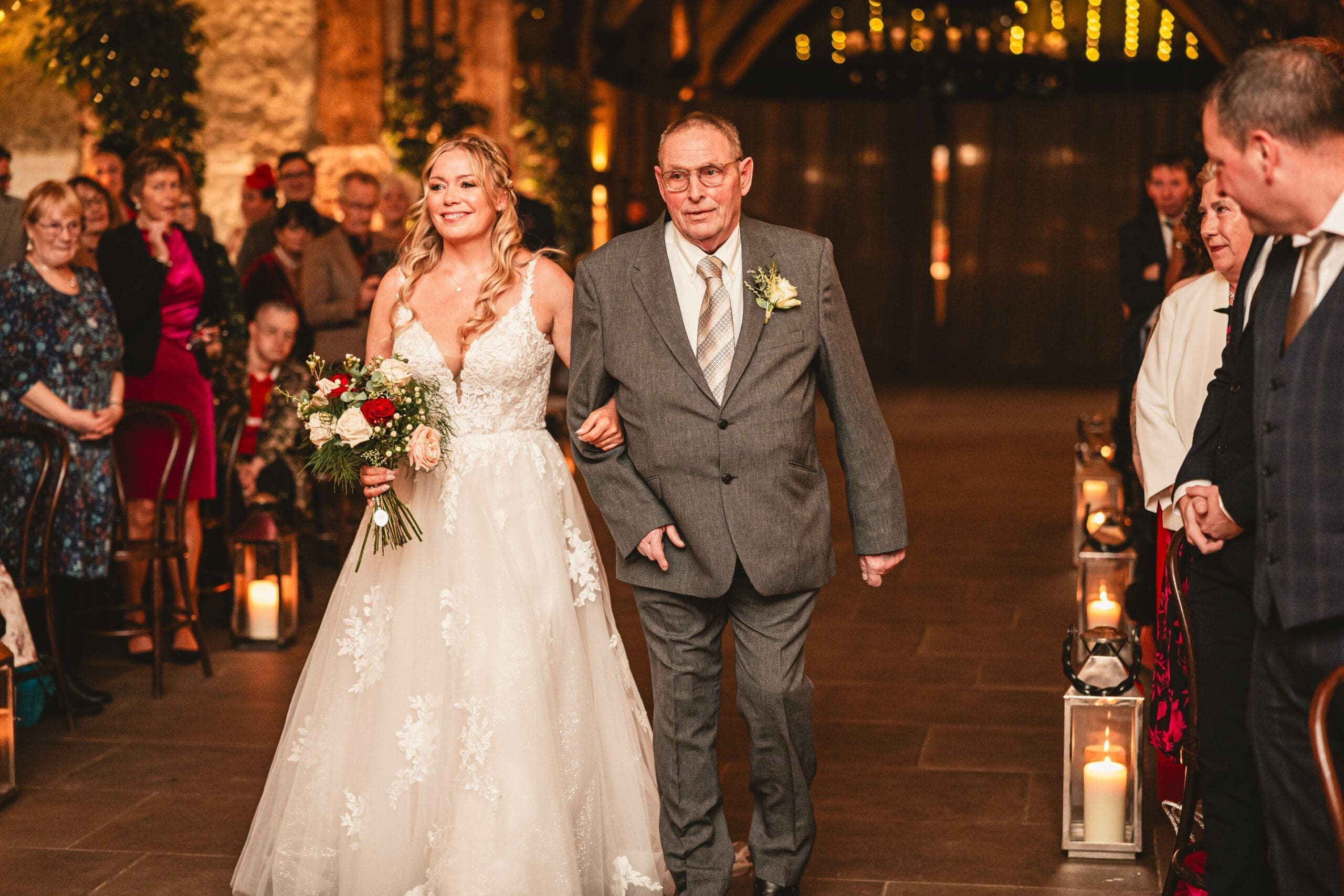
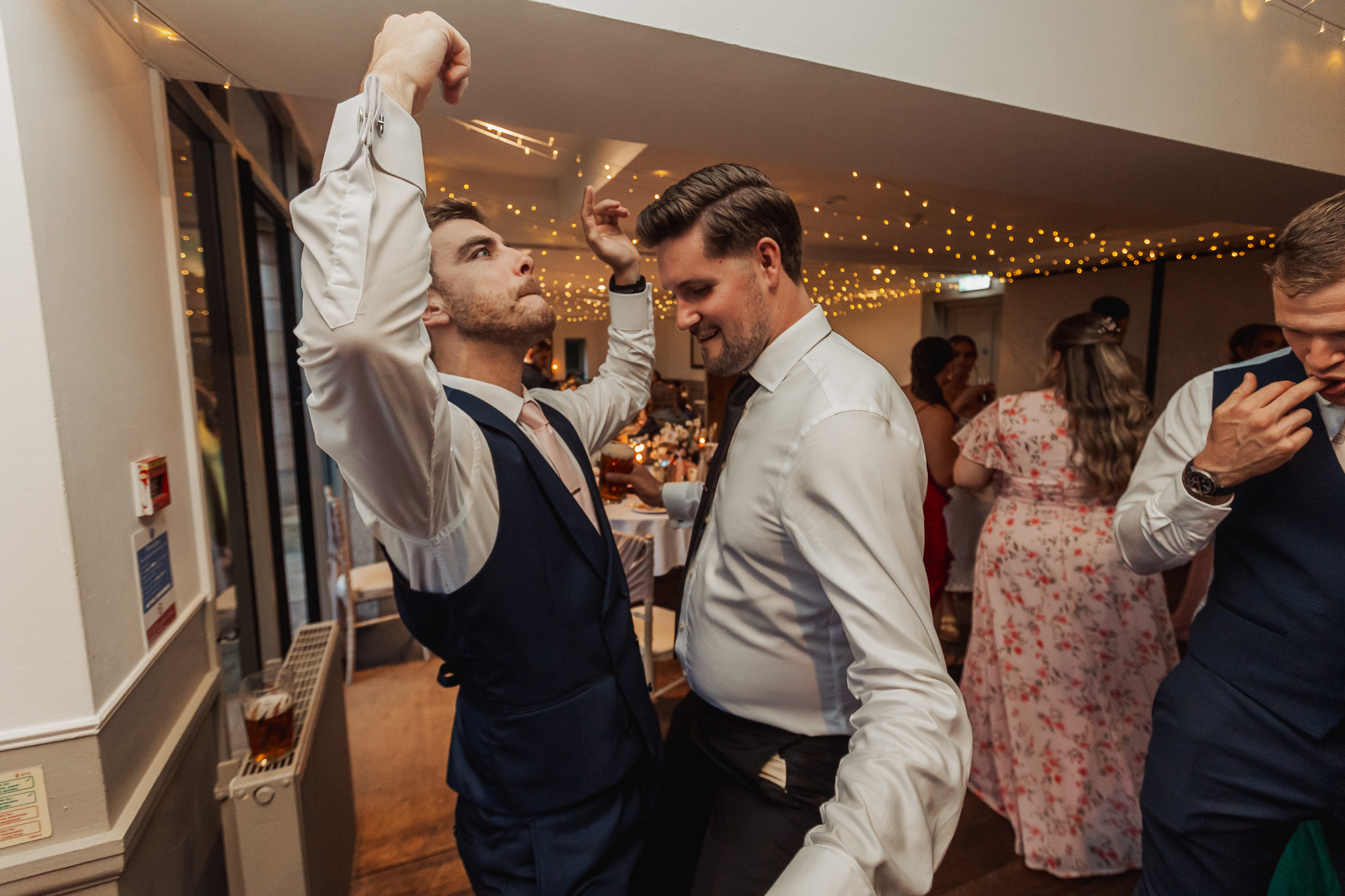
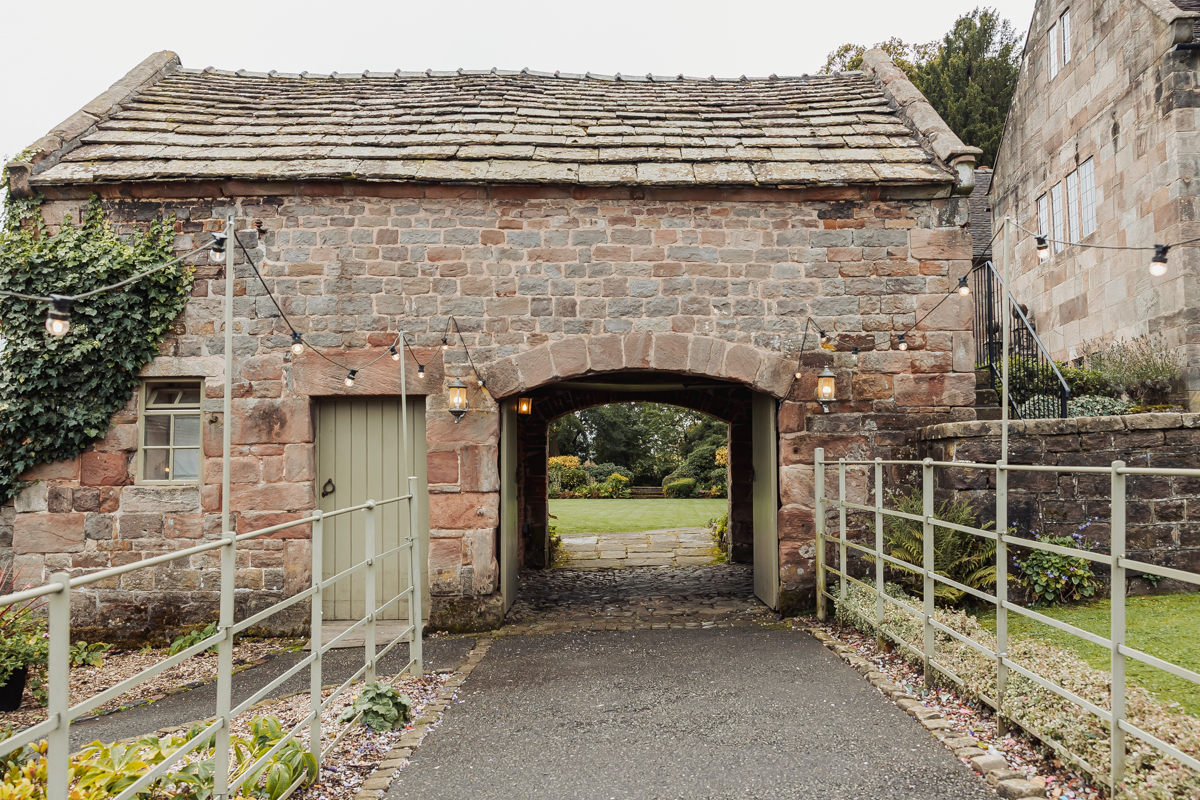
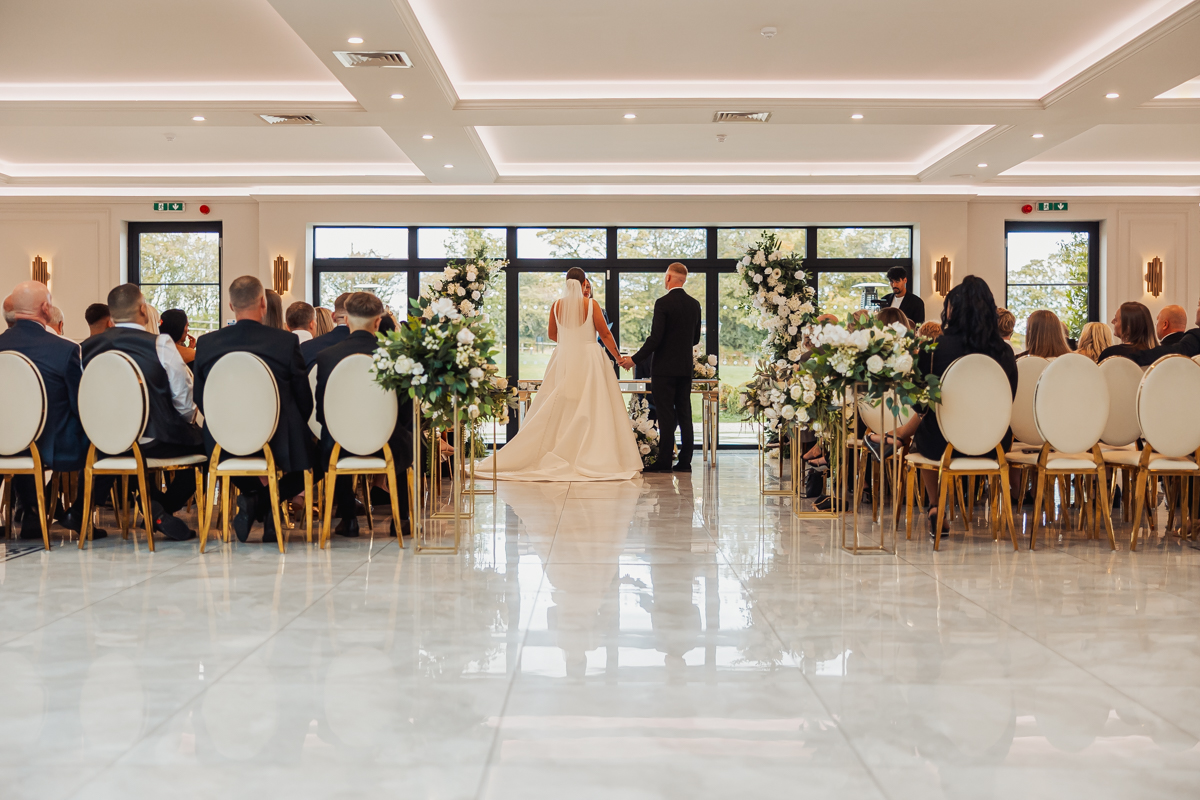
The two rooms above are both lovely. The first has a wall of glass behind the top table and faces the afternoon sun, so everything in it looks soft and clean. The second is a barn lit by candles and a few warm bulbs. Both make good photographs, but they make very different ones, and only one of them will look like the pictures you have been saving.
Ask to see the ceremony room at roughly the time you would be getting married, not at eleven in the morning when the tour happens to be. A north-facing room with small windows is the most common reason ceremony photos come back flat, and there is nothing anyone can do about it on the day.
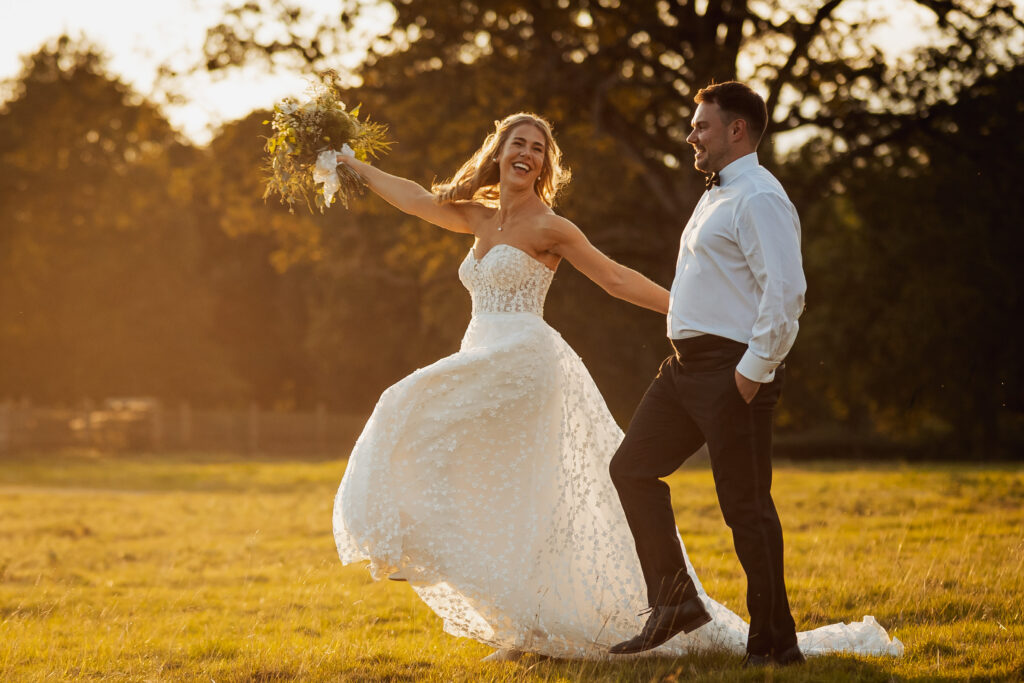
Then ask where the sun sets from here and whether anything is in the way. A west-facing terrace is wonderful. A west-facing terrace with a line of mature trees along it is just a terrace. That last hour before sunset is where most of your best portraits come from, so it is worth knowing now whether you will be able to use it.
Ask where everyone goes when the room turns around
Plenty of venues run the ceremony, the meal and the dancing in the same space. That is completely normal and often the nicest room in the building. But it means there is a turnaround, and during that turnaround your guests have to be somewhere.
So the question is not “is it all one room”, it is “where do a hundred and twenty people stand for forty-five minutes while you reset it”. If the answer is the bar, go and look at the bar. If it is the courtyard, ask what happens when the courtyard is under an inch of water.
While you are there, ask how far the getting-ready room is from the ceremony, and what time you get access in the morning. Mornings always run late, and a five-minute walk between the two turns into fifteen once there are dresses and shoes involved. The access time also decides whether anyone gets to photograph the room looking the way you paid for it to look, before a hundred guests put their bags on the chairs.
The wet-weather question people forget to ask
We are in Yorkshire. This is not a hypothetical.
Every venue has an answer to “what happens if it rains”. The useful follow-up is: does it cost extra, and have you had to use it this year? A venue that uses its wet plan regularly has one that works and will describe it in specifics. A venue that has to think about it is telling you something.
The part that catches people out is group photographs. Forty people is a lot of people to fit indoors, and some otherwise excellent venues simply have nowhere to do it. Ask to be shown the actual spot. If the answer is a corridor, you want to know that in February and not on the morning itself.
Ask about umbrellas too. It sounds like a silly question in a room full of brochures. On the day it is not a silly question at all.
What is included, and what is quietly extra
The gap between “venue hire” and “everything you will actually need on the day” can run into thousands, and it is rarely set out in one place.
Work through it properly: chairs, linen, cutlery, glassware, a cake stand, a PA or a microphone for the speeches, staffing, and whether the price on the brochure assumes a certain number of guests. Then ask about the minimum spend and which dates it applies to, because it is very often only Saturdays between May and September, which may be precisely the date you are after.
Two more that matter and rarely come up. Are supplier meals included, and at what rate? Photographers, videographers and bands all need feeding, and some venues charge the full per-head price for it, which quietly adds a few hundred to your bill. And can the price rise between now and your date? If they say no, ask for it in writing. Most will, happily.
Then read the deposit, payment schedule and cancellation terms properly. It is the dullest page in the pack and the only one that matters if something goes wrong.
The questions good venues actually like being asked
I want to be clear about something, because a list like this can read as though venues are out to get you. They are not. The overwhelming majority of the places I work at are run by people who care a great deal and who would much rather you asked now than found out in June.
A well-run venue enjoys these questions, because the answers are where they beat their competitors. They know their ceremony room faces south-west. They know exactly where the group photos go when it rains, because they did it three times last month. They will tell you the curfew is a noise licence rather than a house rule, and that the coordinator showing you round has been there six years and will be there on your day.
The one I would not skip: ask to see photographs from an ordinary wedding there, not a styled shoot. Styled shoots are staged, lit and shot in perfect weather with models. You want to see a normal Saturday with real guests in it. Any venue worth booking has plenty and will be pleased you asked.
Once you have booked, the next question is timing
When the venue is signed, the decision that shapes the day more than any other is what time your ceremony starts, because everything else stacks up behind it.
The one most couples get caught by is the drinks reception. Venues tend to default to an hour and a half, and depending on your ceremony time and your guest numbers that is either about right or nowhere near enough. I have written a separate piece with a calculator that works it out properly: how long should your drinks reception be.
And if you are still narrowing down where to have it, I have photographed at a lot of these places and am very happy to tell you honestly what I think of somewhere, whether or not you end up booking me. Ask me anything.